You’ve just bought a beautiful gold bracelet. And now the real question hits — can I actually wear this in the shower? What about the gym? Or getting caught in the rain?
It’s the question every jewellery buyer in India asks — and most brands give you a vague, frustrating non-answer.
So here it is, straight: not all gold plated jewellery is waterproof. But the right kind absolutely is.
In this guide we’ll tell you exactly what makes the difference, what to look for, and how YouGorgeous jewellery is built to handle real Indian daily life — monsoons, gym sessions, and everything in between.
The Short Answer
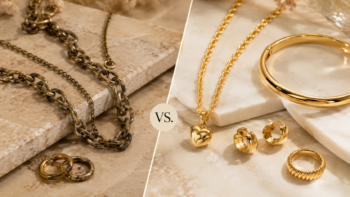
Cheap gold plated jewellery — made on a brass or copper base with thin standard plating — is not waterproof. Water, sweat, and humidity will destroy it within weeks.
High-quality gold plated jewellery — made on a 316L stainless steel base with PVD coating and anti-tarnish sealant — is genuinely waterproof and designed for daily wear including showers, workouts, and rain.
The difference is entirely in the materials. Let us break it down.
Why Regular Gold Plated Jewellery Fails in Water
Standard gold plated jewellery has two weak points when it meets water:
1. The base metal corrodes Most cheap gold plated jewellery uses brass or copper as the base. These metals oxidise rapidly when exposed to water and moisture — especially in India’s humid climate. Once the thin gold layer starts wearing away at friction points, the exposed base metal reacts with water and turns green or black.
2. The gold layer washes off Standard electroplating deposits a very thin gold layer — sometimes as thin as 0.1 microns. Repeated water exposure, soap, and friction physically erode this layer off the surface, leaving dull, patchy metal underneath.
This is why that ₹100 bracelet from a street market turns your wrist green after one monsoon shower. It was never built to handle water.
What Makes Jewellery Truly Waterproof
For gold plated jewellery to be genuinely waterproof, it needs three things working together:
1. The Right Base Metal — 316L Stainless Steel
316L stainless steel is the foundation of truly waterproof jewellery. Here is why it matters:
- Contains 2–3% molybdenum which makes it highly resistant to water, sweat, and chlorides
- Used in surgical implants and marine equipment — environments far harsher than any shower
- Does not rust, corrode, or react with moisture even after years of exposure
- Dramatically more water-resistant than 304L stainless steel, and incomparably better than brass or copper
When the base metal does not react to water, there is no corrosion creeping up under the gold layer — which means the gold stays intact far longer.
2. PVD Gold Coating
PVD (Physical Vapour Deposition) is a modern coating technology where gold is deposited at a molecular level, bonding it deeply and uniformly to the base metal surface.
Compared to standard electroplating:
- PVD coating is 3–5 times harder
- It bonds more deeply so water cannot penetrate between the gold and base metal
- It resists the microscopic abrasion caused by water, soap, and daily friction
- It maintains its colour and finish significantly longer with water exposure
3. Anti-Tarnish E-Coat Sealant
The final layer — a transparent anti-tarnish e-coat — seals the gold surface completely. Think of it as a protective shield that keeps moisture, sweat, and air from reaching the metal underneath. This is the layer that makes the difference between jewellery that survives one monsoon season and jewellery that thrives through years of them.
Water Situations — What Is Safe and What Is Not
Even with high-quality waterproof jewellery, not all water exposure is equal. Here is the honest breakdown:
| Situation | Safe for 316L + PVD Jewellery? |
|---|---|
| Daily shower | ✅ Yes |
| Rain and monsoon | ✅ Yes |
| Gym and sweating | ✅ Yes |
| Washing hands | ✅ Yes |
| Swimming in a pool | ⚠️ Occasional is fine — chlorine is harsh with repeated exposure |
| Swimming in the sea | ⚠️ Rinse after — salt water is corrosive over time |
| Hot tub or jacuzzi | ❌ Avoid — high heat + chemicals accelerate wear |
| Harsh cleaning chemicals | ❌ Always remove — bleach and acids damage any coating |
The honest answer: daily water exposure including showers and rain is completely fine. Prolonged exposure to chlorine, salt water, or harsh chemicals will shorten the life of any coated jewellery — so use common sense for those situations.
India-Specific Water Challenges
India presents some unique challenges for jewellery that most global brands ignore completely:
Monsoon season Four months of high humidity, rain, and constant moisture. Cheap jewellery does not survive this. 316L stainless steel with anti-tarnish coating is specifically built for this.
Hard water Most Indian cities have hard water with high mineral content. Over time, mineral deposits can build up on jewellery surfaces. A simple wipe with a soft dry cloth after your shower removes this completely.
Sweating in heat Indian summers mean constant perspiration. Sweat contains salt and acids that are corrosive to most metals. 316L stainless steel is resistant to exactly these chloride-based corrosives — which is why it outperforms other base metals in Indian conditions specifically.
Coastal cities If you live in Mumbai, Chennai, Kochi, Vizag, or any coastal city — the salt air alone is enough to destroy cheap jewellery. 316L was originally developed for marine environments. It handles coastal Indian conditions better than any other base metal available at this price point.
How to Care for Waterproof Jewellery (To Make It Last Even Longer)
Even genuinely waterproof jewellery lasts longer with a little basic care:
After showering or gym: Wipe your jewellery with a soft dry cloth. Takes 10 seconds and removes mineral deposits, soap residue, and sweat before they sit on the surface.
Storage: Keep in an airtight pouch or zip-lock bag when not wearing. India’s humidity is constant — even waterproof jewellery benefits from dry storage between wears.
Perfume and lotion: Always put jewellery on last — after your perfume and moisturiser have dried. These chemicals are far harsher than water and will degrade any coating over time.
Pool and sea swimming: Rinse with fresh water immediately after exposure to chlorinated or salt water. Pat dry. This simple habit dramatically extends the life of your pieces.
How to Tell If a Brand’s “Waterproof” Claim Is Real
Unfortunately, many brands use “waterproof” and “anti-tarnish” as marketing words without the materials to back them up. Here is how to verify before you buy:
Ask or check for:
- ✅ Base metal specified as 316L stainless steel (not just “stainless steel” or “surgical steel”)
- ✅ Plating method mentioned as PVD or anti-tarnish e-coat
- ✅ Specific care instructions provided — real waterproof jewellery brands give you honest guidance
- ✅ Transparent return or warranty policy
Red flags:
- ❌ Just says “waterproof” with no material details
- ❌ Base metal listed as brass, copper, or unspecified “alloy”
- ❌ Price under ₹100–₹150 — quality materials have a real cost
- ❌ No care instructions anywhere on the website
The YouGorgeous Waterproof Promise
At YouGorgeous™ we offer jewellery across both 304L and 316L stainless steel bases — and we are transparent about which is which so you can choose what suits your lifestyle.
Our 316L collection is built for maximum water resistance — daily showers, gym sessions, monsoon walks, and everything India throws at you. The 316L base combined with 18K gold PVD plating and anti-tarnish e-coat sealant makes these pieces genuinely waterproof for everyday life.
Our 304L collection is a great choice for those who want beautiful anti-tarnish jewellery for regular wear — it handles normal daily moisture well, though we recommend removing it before long water exposure like swimming.
Every single piece we sell — regardless of base metal — is finished with 18K gold plating and anti-tarnish coating, and is significantly more water-resistant than standard fashion jewellery.
Starting at just ₹299, you should never have to choose between beautiful jewellery and your daily routine.
Shop Waterproof Jewellery → Browse Bracelets → Shop Under ₹499 →
Frequently Asked Questions
Q: Is gold plated jewellery waterproof? A: It depends on the quality. Cheap gold plated jewellery on a brass or copper base is not waterproof and will tarnish quickly with water exposure. High-quality gold plated jewellery on a 316L stainless steel base with PVD coating and anti-tarnish sealant is genuinely waterproof and safe for daily showers, rain, and gym use.
Q: Can I wear gold plated jewellery in the shower? A: Yes — if it is made with 316L stainless steel and PVD anti-tarnish coating. These pieces are designed for daily water exposure. We recommend wiping dry after showering and avoiding harsh soaps sitting on the surface for long periods.
Q: Can I wear gold plated jewellery to the gym? A: Yes. 316L stainless steel is highly resistant to sweat and the chlorides in perspiration. YouGorgeous 316L pieces are specifically suitable for gym wear. Just wipe down after your session to remove sweat residue.
Q: Will gold plated jewellery turn green in the rain? A: Cheap brass-based gold plated jewellery can turn green in the rain over time. High-quality 316L stainless steel based jewellery with anti-tarnish coating will not — it is designed to handle India’s monsoon season.
Q: Can I swim with gold plated jewellery? A: Occasional swimming is generally fine for 316L + PVD jewellery. However, repeated exposure to chlorinated pool water or salt water will shorten its lifespan over time. Rinse with fresh water immediately after swimming and pat dry.
Q: Is waterproof jewellery safe for sensitive skin? A: Yes — 316L stainless steel is hypoallergenic and nickel-free, making it safe for sensitive skin. The anti-tarnish coating also creates a barrier between the metal and your skin, further reducing any chance of irritation.
Q: How do I clean waterproof gold plated jewellery? A: Simply wipe with a soft dry cloth after wearing. For deeper cleaning, use a soft cloth slightly dampened with plain water — no harsh soaps or chemical cleaners. Dry thoroughly before storing.
Q: Does anti-tarnish mean waterproof? A: Not always — these are two different properties. Anti-tarnish refers to resistance against oxidation and tarnishing. Waterproof refers to resistance against water damage. High-quality jewellery should have both — which is why the base metal (316L stainless steel) and the coating (PVD + e-coat) both matter.
YouGorgeous™ jewellery is designed for real Indian daily life — rain, sweat, gym, and everything in between. Explore the full waterproof anti-tarnish collection at yougorgeous.in. Follow us on instagram for latest product launches.